
SO-101: low-cost open-source robot arm for LeRobot
 @therobotstudio
A 3D-printed 6-DOF follower arm on six Feetech STS3215 serial bus servos, teleoperated by a matching leader arm to collect data and train AI policies with Hugging Face LeRobot.
The AI-powered studio that takes you from schematic to motion. Electronics, mechanics, simulation and motion design in one place.
Learn moreDescribe a project in your own words. The agent will set up your workspace and get started.
Real robots built in FloMotion. Open one to see how it works, or fork it and make it yours.
@therobotstudioA 3D-printed 6-DOF follower arm on six Feetech STS3215 serial bus servos, teleoperated by a matching leader arm to collect data and train AI policies with Hugging Face LeRobot.

 @alexanderkoch-koch
Alexander Koch's open-source 3D-printed robot arm for robot learning: two Dynamixel XL430s and four XL330s, about $250 for the follower, teleoperated by a matching leader arm.
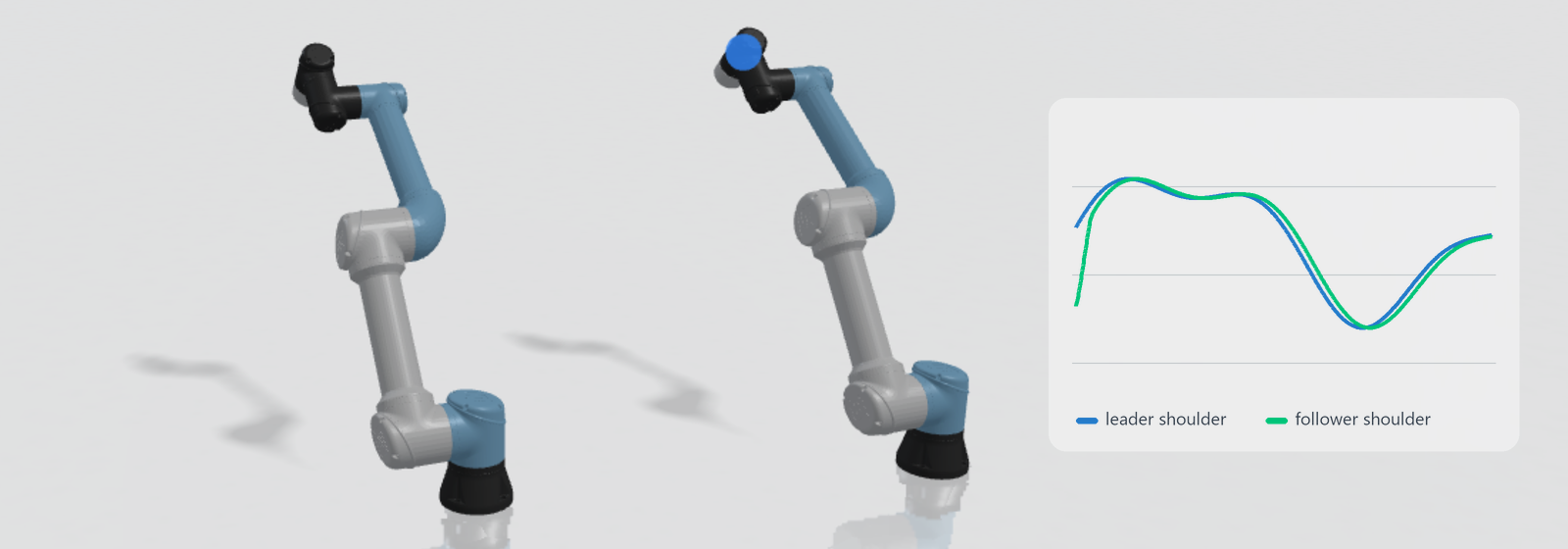
In leader-follower teleoperation a person moves one arm, the leader, and a second arm, the follower, copies the motion. This article goes through how that setup works from nuclear hot cells to low-cost GELLO rigs, and walks through building and checking one in a FloMotion scene.
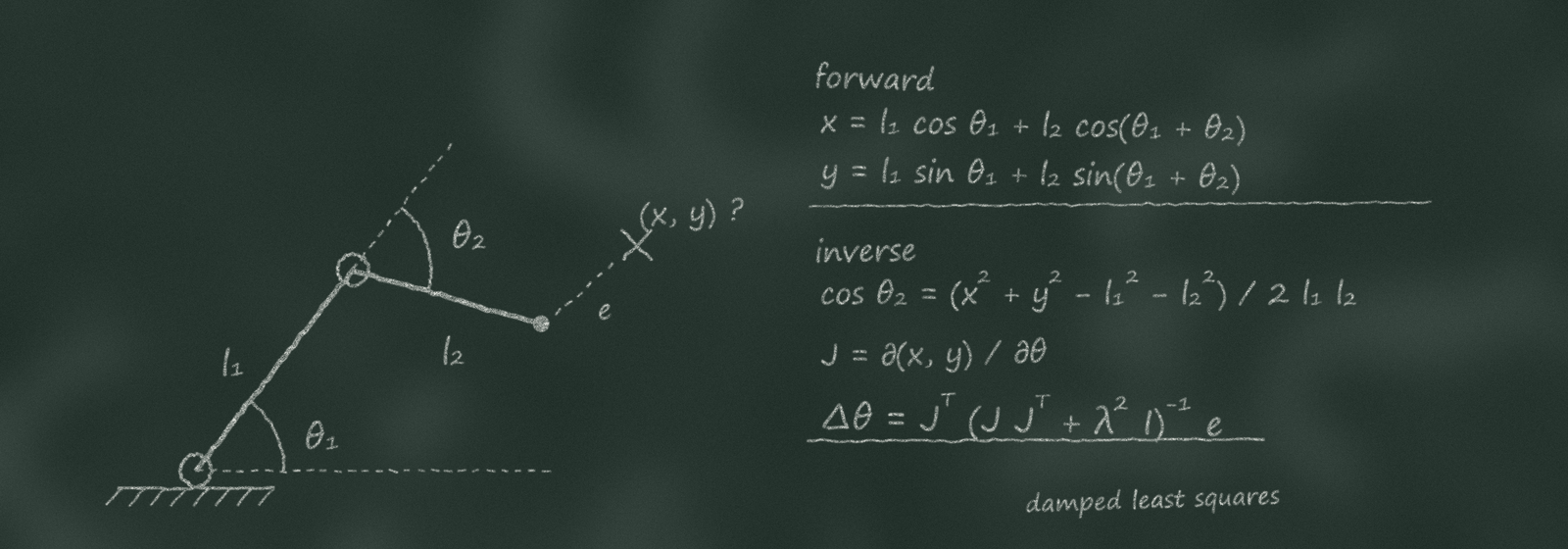
Motors turn in angles, while tasks are stated as positions and orientations in space. Kinematics is the geometry that links the two. This article goes through forward kinematics, the three families of inverse kinematics, and where each one appears in FloMotion.
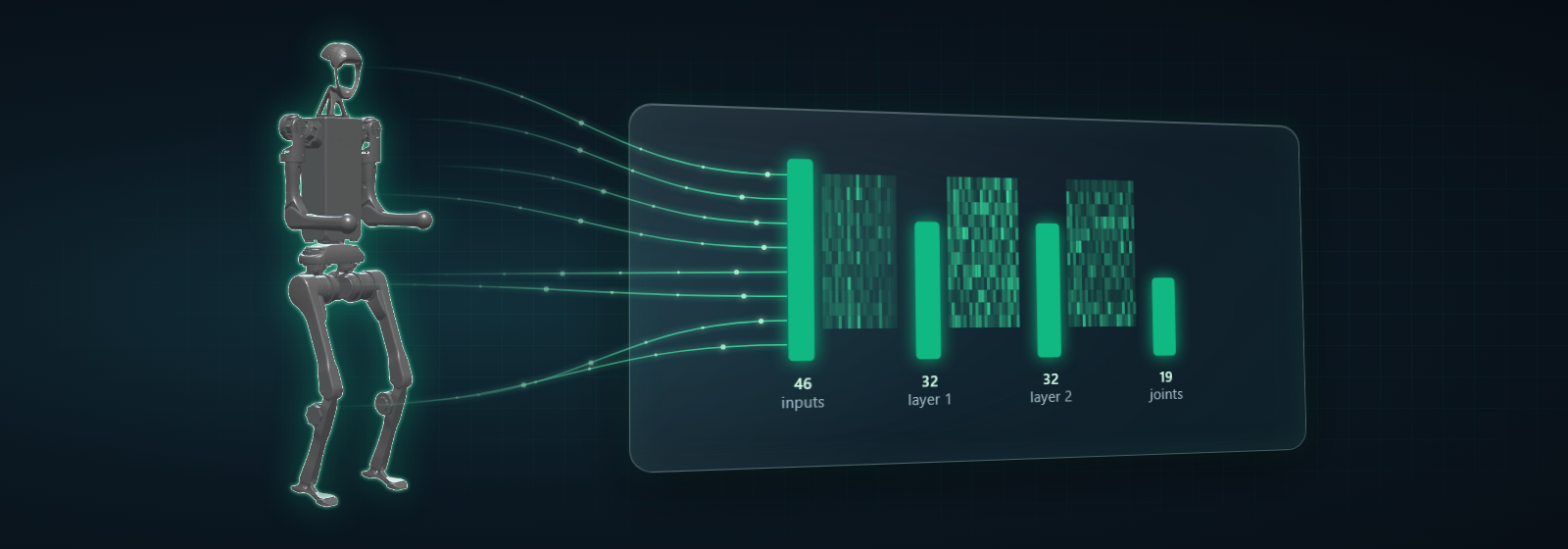
A walking policy trained in simulation usually runs on a computer next to the robot. A small one fits on the microcontroller that drives the servos. This article follows such a policy onto an ESP32: the Arduino sketch, the FloMotion inference library, the model file in flash, and the same firmware running as the robot's controller in a FloMotion scene before any board is flashed.
Share what you're building, get help, and follow along as we ship new features.